Nowhere in Europe are ecommerce sales expected to grow faster through 2029 than in Turkey. Bulgaria ranks second, according to a new top 10 compiled by ECDB. “Eastern and Southeastern European countries are leading the growth race”, the ecommerce statistics company states.
Germany-based ECDB tracks ecommerce developments around the world. The company compared growth forecasts for European countries and distilled a top 10 ranking from the results. The ranking is based on the average annual growth rates expected between 2025 and 2029.
Turkey and Bulgaria lead the way
Turkey tops the list, with average annual ecommerce growth of 12.9 percent through 2029. Online spending in Bulgaria is expected to grow almost as quickly, at 12.5 percent. Bosnia and Herzegovina and Malta share third place, each with a projected annual growth of 10.0 percent.
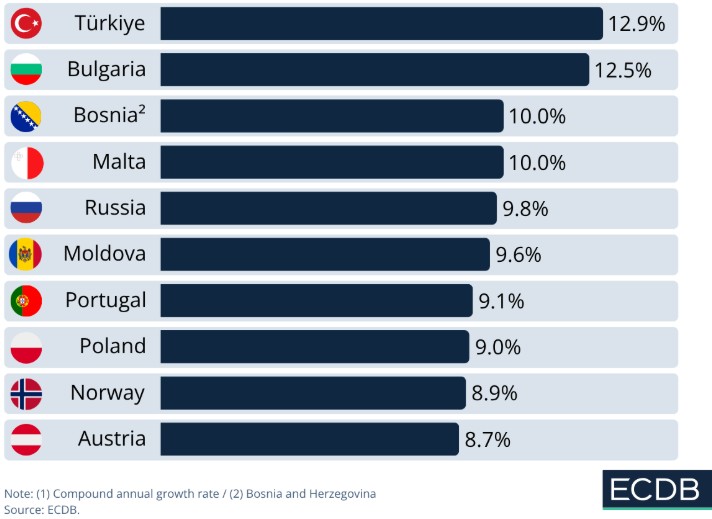
Turkey, the number one market in the ranking, has a population of around 86 million, far larger than the other countries in the top positions. According to the government, Turkish online spending reached approximately 86 billion euros last year, representing growth of 16 percent. In Bulgaria, where Zalando is set to launch soon, ecommerce adoption is limited. Online spending amounted to approximately 1.2 billion euros last year, according to ECDB.
Nearly 10 percent annual growth in Russia
Russia, home to Ozon and Wildberries, Europe’s second- and third-largest ecommerce companies, ranks fifth in the list with expected average annual growth of 9.8 percent. Poland, in eighth place, exemplifies the steady expansion of ecommerce in Central Europe.
Strongest growth in Eastern and Southern Europe
The strongest growth is concentrated in the eastern and southern parts of the continent, ECDB notes. “The reasons for their fast development are structural and by no means accidental”, the company explains. The drivers of growth differ from country to country. In many of these markets, ecommerce is still at a relatively early stage of adoption. In addition, infrastructure and marketplace ecosystems continue to offer substantial growth potential.