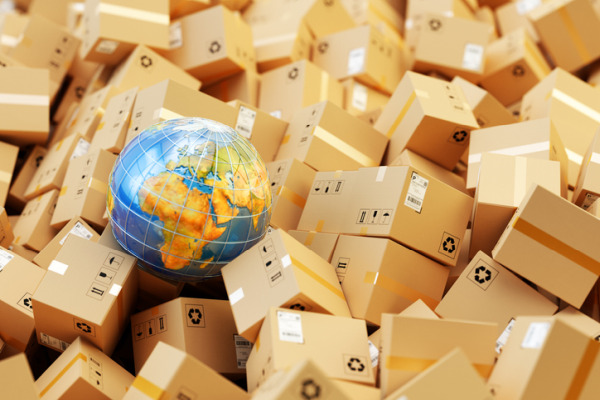
The number of low-cost ecommerce parcels that the European Union received from outside the Union rose sharply again last year, increasing by 26 percent. In total, 5.8 billion parcels with a value of up to 150 euros were imported. That amounts to roughly one parcel per EU citizen per month.
The amount of international ecommerce parcels containing relatively low-priced products has been growing for years and is a thorn in Brussels’ side. Most of these parcels come from China, driven by purchases made by European consumers on platforms such as AliExpress, Shein and Temu. These platforms have experienced years of explosive growth, although their growth rate has recently slowed somewhat.
Mountain of Chinese parcels
The total number of parcels entering the European Union was 26 percent higher last year than in 2024, according to the European Commission. The volume is more than four times higher than in 2022. Customs authorities in EU member states are struggling to inspect the contents of these parcels. In practice, this often proves impossible, allowing unsafe products to flood the market. In addition to the risk of harm to consumers, this creates unfair competition for European companies. The Commission previously estimated that around two-thirds of small parcels entering the EU were undervalued to avoid customs duties, Reuters notes.
International parcel volume quadrupled in three years
In recent years, the European Union has taken several steps to curb the flow of parcels, particularly from China. It decided to phase out the VAT exemption for international shippers more quickly and to introduce a fixed fee of 3 euros per product from July. Separately, work is under way on a European handling fee, which is expected later this year.
Local warehouses
AliExpress, Shein and Temu, as well as JD.com, are building warehouses on the European continent. This is not only intended to circumvent import tariffs, but also to enable faster delivery to consumers, combining low prices with speed. Temu, which rivals Amazon in global cross-border sales, for example aims to achieve 80 percent local shipping in Europe, partly thanks to the growing number of European selling partners.