Checkout friction often determines whether a sale happens — but post-purchase refund friction can erode profit margins. New data suggests that expanding payment options may be one of the most effective ways to improve both.
According to global payments technology firm ACI Worldwide, seven out of every 10 online shoppers abandon their carts at checkout, resulting in $4 trillion in lost sales each year. The primary culprit is not price sensitivity or shipping costs. This is a payment limitation that three strategic additions can resolve.
ACI released research in February showing that two-thirds of shoppers regularly abandon their shopping carts and walk away — particularly on mobile — without completing transactions, resulting in significant losses for retailers. But retailers could materially change that outcome by rethinking how they handle payments.
The fix, researchers said, is simple. Providing virtual shoppers with the top three payment methods, rather than just the most popular, can increase conversions by up to 30%.
AI-powered tools and insights are driving the next wave of retail growth, according to Dan Coates, director of product management at ACI. These tools enable merchants to optimize performance and increase customer engagement while embracing emerging payment methods, including mobile wallets, account-to-account (A2A) payments, and digital currencies.
“Payment choice isn’t just convenience anymore. It’s a critical conversion driver,” he said.
3 Payment Methods Increase Conversions
Table of Contents
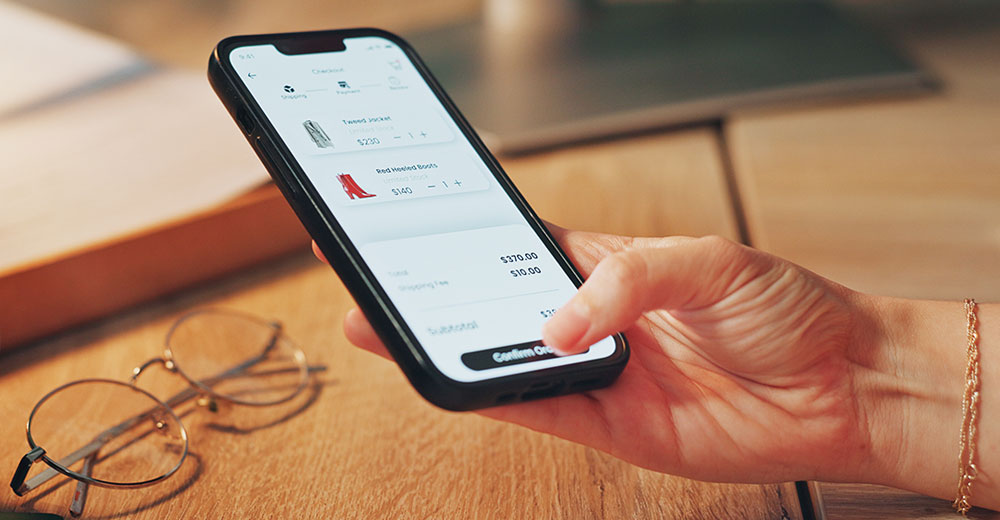
Researchers found that mobile commerce has the lowest conversion rate among all channels. It accounts for 68% of all e-commerce traffic but suffers an 85% cart abandonment rate. Mobile shoppers will not manually enter a 16-digit card number on a six-inch screen when one-click options exist.
“The single biggest technical friction factor on mobile is manual data entry. Typing card numbers, billing details, and addresses on a small screen introduces delay and error. Each additional field increases abandonment risk,” Adriana Iordan, ACI’s SVP for merchant and payments intelligence, told the E-Commerce Times.
She sees the most effective way to reduce that friction is through digital wallets, stored credentials, tokenization, and biometric authentication. When shoppers can authenticate with a fingerprint or facial recognition and use securely stored payment credentials, checkout becomes dramatically faster and more reliable.
“The shift is already happening. Mobile wallet adoption is accelerating globally, and the merchants seeing the best mobile conversion rates are those who have made alternative authentication the default, not the exception,” Iordan explained.
Transaction data analysis shows that adding even a single relevant payment method increases conversion by an average of 7%, she added. That means three well-chosen methods can realistically deliver 20% or more in combined lift.
Payment Options Decide the Sale
The payment problem is pervasive, Iordan observed. In 2024, 61% of consumers abandoned a purchase because their preferred payment method was not offered.
“Yet 21% of e-commerce sites still accept only one payment method. Shoppers arrive ready to buy and leave because checkout friction stands between intent and transaction,” she said.
The key to higher sales conversion rates is for retailers to balance variety with simplicity. Retailers should focus on curated options, not maximum choice. Payment methods should reflect customer demand by region, device, and demographic rather than offering every available option.
Iordan explained that from an operational standpoint, simplicity comes from using a unified orchestration strategy that standardizes reporting, reconciliation, fraud controls, and routing across providers. That allows retailers to expand front-end choice without multiplying back-end complexity.
“The retailers getting this right are treating payment method selection as a data-driven decision. They analyze which methods actually drive conversion in each market, then optimize for those, rather than assuming more options automatically means better outcomes,” she said.
Bank-Backed Checkout Builds Trust
New methods are already in play to help ease the friction that online shoppers often associate with checkout, including concerns about convenience and security. Digital checkout platform Paze launched nationally in 2024 with more than 150 million credit and debit cards already provisioned from eight major U.S. banks, including Chase, Bank of America, Capital One, Wells Fargo, and PNC.
The platform eliminates the download barrier that discourages some potential users. No app download is required. Consumers see a Paze button at checkout, click it, and their bank-verified card and address information auto-populate with tokenized security.
“It’s becoming crucial to ensure a convenient online checkout as more shoppers continue to transition to a digital shopping experience,” said Paze GM Serge Elkiner. “Paze now provides more than 150 million credit and debit cardholders the ability to check out easily with the added security of tokenization.”
The security positioning matters: 82% of consumers trust their bank’s security more than third-party payment options, according to Paze Pulse research. This positions Paze distinctly in an era of wallet fatigue, where consumers juggle multiple third-party apps with varying levels of trust.
Retailers Must Adapt to Payment Trends
Beyond traditional cards and digital wallets, payment innovation is accelerating across multiple fronts. Click to Pay, the EMVCo standard backed by Visa, Mastercard, Amex, and Discover, now reaches more than 500,000 online stores in the U.S., with an 88% conversion rate.
Buy Now, Pay Later (BNPL) adoption studies show that 40% of users abandon checkout if the option is missing. Account-to-account payments and stablecoins are gaining traction in specific markets, each addressing different consumer preferences and use cases.
“Offering the top three preferred payment methods in a market can improve conversions by up to 30%,” said Coates.
Access to new technology is expanding. But not all retailers are fully acclimated to frictionless checkout becoming the standard.
Iordan emphasized that a fully streamlined checkout omnichannel requires significant infrastructure investment and operational complexity. That includes stored credentials, one-click checkout, digital wallets, tokenized payments, and risk-based authentication.
“As these technologies become more widely adopted, the checkout experience will feel increasingly seamless without requiring specialized hardware or entirely new store models,” she reasoned.
Payment Infrastructure Evolving
Iordan agreed, however, that accessibility is changing. Capabilities that were once only available to the largest enterprise merchants — sophisticated orchestration, tokenization, intelligent routing — are now available through platforms that mid-market retailers can implement without massive infrastructure investment.
She noted that, with e-commerce volumes up 28.3%, retailers’ current payment infrastructure is not scaling fast enough. When growth occurs at that pace, legacy systems can struggle with routing efficiency, exception handling, and real-time decisioning.
“Friction can emerge from outdated integrations, fragmented providers, and static risk rules that do not scale with transaction growth,” she explained. “The technology gap is closing faster than most realize.”
Retailers’ New Payment Reality
Online merchants that invest in cloud-native, scalable payment platforms with intelligent routing and adaptive authentication will better maintain performance and minimize friction even as volumes rise. The infrastructure question is becoming a competitive question, according to Iordan.
Retailers with modern, scalable payment systems can handle volume spikes without degradation. Those running on legacy infrastructure face a choice: either over-provision capacity that sits idle most of the year or accept performance degradation during peak periods, she predicted.
“Neither option is sustainable as e-commerce growth continues to accelerate,” she concluded.