Artificial intelligence is beginning to reshape how shoppers discover products. The shift could create a new attribution blind spot for retailers, direct-to-consumer brands, and consumer goods manufacturers.
A growing, albeit small, number of consumers begin their product research not with a search engine or marketplace, but with a conversational query to an AI assistant.
In traditional search results, multiple brands compete for attention. With AI answers, only one or a handful may appear.
“Discoverability has collapsed from 10 links to one answer,” said Kaushik Boruah, business head CPG and hospitality for LatentView, an India-based data analytics firm.
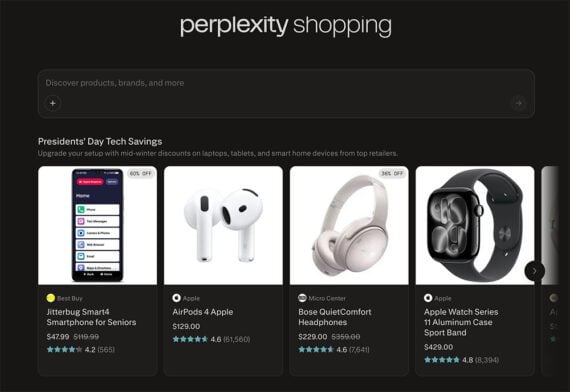
A generative AI platform such as Perplexity can recommend products or make them available for direct purchases.
Discovery Moving Upstream
Online product discovery has, in a sense, always involved multiple platforms. Shoppers may look for products on Google and other search engines, on marketplaces such as Amazon, or on social media platforms.
Now, conversational AI tools are part of that mix.
Consumers might ask an AI assistant to recommend comfortable apparel or a fragrance-free soap, Boruah added. The AI proposes options and explains the reasoning. By the time she reaches a seller’s website, the shopper has decided what to buy.
Hence the discovery process has shifted upstream into a system merchants do not control and cannot easily measure.
Attribution Blind Spot
Suppose a shopper asks an AI assistant for product recommendations. After receiving an answer, the shopper visits Google, searches for the brand, and purchases through Amazon.
Does Amazon attribute the sale to search or direct traffic? What role did the brand’s marketing play? And who notices that AI was the original influence?
This gap is the attribution blind spot, according to Boruah.
The lack of measurement creates a dilemma for marketers. They know consumer discovery is changing, or at least adding new AI channels. But shifting budgets toward AI channels is difficult when the return on investment is unclear.
Boruah said many companies recognize the shift but remain cautious. “They know they will have to invest. They don’t know when and how,” he said.
As a result, marketing teams continue to prioritize channels with measurable outcomes, even though earlier AI interactions are shaping purchase decisions.
In a sense, this AI blind spot is similar to attribution concerns about the possible end of third-party cookies.
For example, both the loss of cookies and the emergence of AI shopping influence reduce visibility into the customer journey. Both shift measurement toward modeling. Unfortunately, AI’s attribution blind spot may be harder to solve.
Measurement
Because direct attribution is limited, companies are experimenting with alternative ways to measure AI influence.
One approach is incremental testing — controlled experiments where campaigns appear in some regions or audiences but not others. The resulting lift in sales helps estimate the true contribution of a channel, even if individual interactions remain untrackable.
Another option is marketing mix modeling, which analyzes large datasets, including advertising spend, pricing, and sales trends, to estimate how different marketing activities influence revenue.
Some marketers are also conducting surveys and brand-lift studies to understand whether shoppers use AI assistants.
Analytics platforms are likely to play a larger role as well. As AI discovery grows, analytics vendors are exploring ways to incorporate new signals into attribution models. These could include AI referral indicators, aggregated behavioral patterns, or integrations with emerging commerce interfaces.
A portion of shoppers have always arrived with no visible origin in analytics. Similarly, much of AI’s influence on shopping remains invisible, at least for now.