We sat down with illustrator and textile designer Claudia Pearson to learn more about her eponymous and thriving line of household art products and giftware. We discussed how she got her start, her inspirations, and what keeps her going as an artist. The following video is the result, and below is the transcript of our conversation, edited for length, clarity, and to fit the format.
Claudia
I’ve been illustrating my entire life. I moved to New York from London when I was 25 and started out as a commercial illustrator in the mid 90s: illustrating for books and magazines for advertising.
I had my kids in my early thirties and wanted to work from home, so I launched a small product line and applied my illustrations. In 2008, I launched my Etsy shop and started with a small line of prints for kids’ rooms.
In 2010, I decided to try a new product and being British, I thought it should be a tea towel. I’d been shopping at my local farmer’s market in New York and eating as seasonally as I could and thought, I should produce a tea towel calendar that showed what was growing and available in every season. That became my first Claudia Pearson product. I digitally printed it and a good friend of mine sewed it together. We only made 100 and in the space of five minutes, I’d sold above and beyond the amount that I’d made. At that moment, I realized it was viable.
I looked further into production and found a tea towel supplier who is, to this day, still is [my supplier]. He also does all my printing. They’re based out in the Midwest and it organically grew from there.
I wanted to keep it that way and so I slowly added new products: tote bags in different sizes and then smaller, more touristy souvenirs.
Claudia
I’m deeply inspired by nature and also by place and identity in your place. People are very connected to their spaces, whether it’s an urban environment or a natural environment. I love trying to encapsulate that within my designs.
I like looking at a city, for instance, and exploring an architectural element or food or animal and being able to encapsulate or illustrate it. People who go to that city are then able to take a piece of that place home with them. That translates also to the natural environment and how I draw inspiration from hikes that I take and being in nature myself.
Claudia
When I launched my business in 2010, it was very small. I had about five tea towel designs and was doing everything on my own from my apartment and studio, which was in the same building. I would go down every day, look at orders that had come in, and pack and ship those orders myself.
Within the first two or three years, I was able to bring on an assistant. She’s still my studio manager today. Then, a few years later, we brought on a full-time printer. A few years after that, we found a fulfillment center, handed off that part of the work, and connected with more small businesses who do production for us in the United States.
It’s important that we work with small businesses who understand the constraints and are able to offer smaller runs of products. Because we’re not making anything overseas, we’re able to control smaller runs and not get in over our budgets.
Gradually, I’ve expanded year on year and added new components to the business. I was determined to grow the business organically. I didn’t want to get in over my head with debt. I’ve always just grown the business as I see fit, which means not having a business plan. Sometimes that’s great, and sometimes I wish I could’ve been more focused. But, this is the way I work, and it’s worked thus far 15 years later.
I wasn’t a business owner — I’m an artist — I had to learn the business on the fly. I didn’t go to class or study it. Learning terms like minimum orders, cost of goods, profit and loss, those were completely random words that made no sense to me. Over the years I’ve taught myself and learned from fellow artists, designers, and community members that run their own businesses.
Claudia
I had success on Etsy and could see the business was viable, so I thought this was time to invest in my own website and looked into what was available.
In 2013, I launched ClaudiaPearson.com on WooCommerce. I was drawn to WooCommerce because of the ability to customize, and as an artist, I didn’t want the site to look generic. I wanted it to have personal touches. When people come to my site to shop, they’re already experiencing some of the art and creativity that I pour into the work I love.
Claudia
What I love about WooCommerce is the ability to customize and use textures that come through in my work on the site. All the buttons that you click on, for instance, are all hand-drawn watercolor textures.
On the backend, I love how easy it is to add and remove products and on the frontend, we can change the slides to feature new releases and collections. It’s exciting to use the categories in the backend to prioritize and change the way products appear on the site. If I have items on sale, those might appear somewhere else, for example. Having that flexibility is great.
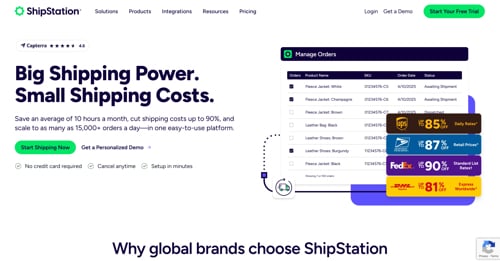
As for integration, ShipStation is the platform we use for our fulfillment and everything’s extremely seamless. The product goes straight into ShipStation and our fulfillment center can access it and do all the shipping and handling from there. It’s been brilliant.
Claudia
When I started the business, I was approached by a few boutiques and shops. I realized quickly that I had the capacity to do wholesale. Still, to this day, I’d say my business is primarily wholesale. I sell to museum and airport stores, small boutiques, and large online shops.
I collaborate with a few big, large online retailers and it’s been a huge learning curve to understand all the different components of wholesale: product development, manufacturing, cost of goods, etc.
Claudia
When I launched my career in the mid 90s, I was actively working with a lot of magazines. Editorial was a huge component of my work as an illustrator, which extended to working with book publishers, cookbooks, and card companies. I’ve done a lot of illustration projects for them over 20 years.
In 2016, I was invited by West Elm to collaborate on a line of dogs illustrated in funny outfits to reproduce onto plates, prints, and tea towels. That collaboration’s been going on for years now, and we still work together. It’s fun to be inspired by a company that sees value in what you do and have conversations about how you can work to merge their and your visions together. It’s an interesting adventure and a way of challenging who you are as an artist.
Claudia
The city- and state-themed tea towels have undoubtedly been my bestsellers over the years.
When somebody travels to a city, they want a souvenir or memento, and somehow I’m able to capture something that’s unique and different from what they’ll see in a typical tourist shop. I’ve had people who collect my towels — all the cities and states — and that’s fun to hear.
On a personal level, I absolutely love my new collection called Field Guide. I’m devastated on a daily basis about climate and what we’re doing to our planet. As an avid hiker and someone who loves getting out in nature and hugging trees, I wanted to create a line that speaks to that.
In 2023, I created Field Guide, which shares what you might find if you go outside in each state: what grows if you were foraging and what trees, birds, and flowers you’d be looking at. The hope is that someone will see the design and want to get out to learn more about the environment around them and then take care of it.
Claudia
As I mentioned earlier, WooCommerce is integrated with ShipStation. What will usually happen is a customer will shop on my website and those items will immediately port into my ShipStation platform. A day later, the fulfillment team will look at each order, following the stock keeping unit (SKU), an internal code we use for each product. They’ll pick the items from the bin, wrap them carefully, and put them into packaging with the label. Then it goes off and arrives to the customer three to five days later.
The problems I’ve had are mainly just managing inventory. I’m not a big company; I try to manage my budget quite carefully, so I tend to not overprint and overstock. The only problem I have from time to time is when an item is out of stock and we haven’t yet adjusted that on WooCommerce. A customer would still be able to order that item, but now there’s a bit of a wait for it.
But what’s important is that you’re transparent and human, fully communicating with the customer: telling them you’re sorry, you’re a small team, and you’re working hard behind the scenes to make things work. We also offer them something in return: a coupon code so they can get more of a discount. We’ve seen great success with that.
In the span of 15 years, we’ve only had a handful of disgruntled customers. Otherwise, everybody is open because they understand what it’s like to run a small business and want to support you.
Claudia
I have an Instagram following and post as much as I can. I have a newsletter; when you visit my website for the first time, you’ll see a mailing list form that will offer 15% off your first order once you sign up. On a good month, I’ll send my newsletter out once a week; on a bad month, at least once. In these newsletters, I try to pour in my humanity: stories about what I’ve been doing and my connections to my customers.
I also do a couple of in-person markets twice a year. Within that space, I find a lot of repeat customers that come up and tell me crazy stories like they’ve collected my products for 15 years. One woman said my wife has literally every single tea towel you’ve ever made, which was very sweet. I said, I hope you use them. And she said, no, they’re folded up in a drawer. I’ve never used them. And I said, well, what’s the point in that? Get them out, enjoy them.
That’s when I can get a sense of what people are looking for as well. It resonates.
Claudia
Going back to what I said earlier, I was intent on not getting into debt and of being in full control of my business, not having anyone else tell me what I should or shouldn’t do.
If you’re able to start with a couple of small products, look into local printing and manufacturing. Build relationships with other small businesses that can help you produce smaller quantities of things so you’re not in over your head with massive minimum orders.
Then tune into what people really want; that’s important. Look at the data, understand what people are buying, and grow the line horizontally that way.
That’s when you can start to add more SKUs and more money will start coming in. You can hire someone and slowly build from there.
Claudia
Having sat down and looked at the data, I’ve realized I’m sitting on a gold mine that I haven’t been pursuing enough. Being primarily a wholesale business, I’ve been lucky that I’ve been able to keep my retail business flourishing, without putting much effort into it.
I’ve hired an SEO manager and we’re going to start advertising, building more customer loyalty, and catering to repeat customers to grow our ecommerce business.
I’m also enjoying painting as a break from commercial illustration and product design. I’m looking forward to experiencing more of my inspiration in nature and more collaborations.
I’ve been trying to — and this sounds corny — but practice gratitude. We can move through our days sometimes without truly looking at what’s around us. In these uncertain times, with the world being a bit crazy, I want to constantly remind myself how fortunate I am to be in this position and to have run a business for myself that has been extremely challenging.
I’ve had some major obstacles along the way. I consider the pandemic to be one of them and to still be in business 15 years later, I’m humbled. But I also know that’s from hard work.
I love not having to be here at any given time; I can choose when to come to work. I can take a day off if I need some inspiration and go to a museum or gallery or go hiking. I knew early on that being present for my family and my kids as they were growing up was important to me too. Being from England and not living there anymore, I wanted to be able to travel.
I’m grateful for it all. It’s a journey.

About
Vanessa Petersen
Vanessa has spent her career writing helpful things for people across the tech space. Outside of work, she enjoys training for triathlon, rotating through hobbies, and exploring new places both urban and natural. She has two fluffy cats, maintains a few succulents, and has far too many books on her TBR shelf.