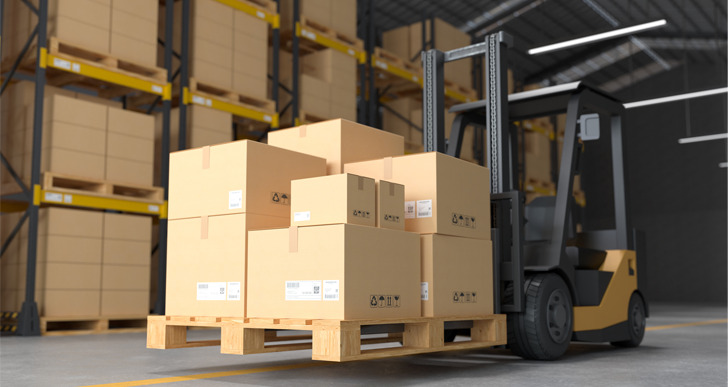
Online sellers are increasingly dividing their stock across warehouses in several markets to provide a more local experience to their customers. According to global fulfilment provider fulfilmentcrowd, localizing stock will become increasingly more important for international sellers following the introduction of parcel fees on imported goods in the European Union.
Localization needed after international expansion
While many online sellers run fulfilment from one central warehouse, fulfilmentcrowd has seen a shift towards distributed networks with multiple locations. “Businesses are rethinking whether a single-node model can still meet today’s expectations for speed, cost and resilience. One warehouse works well in the early stages, as it is easier to manage and control stock,” said Paul Taylor, Managing Director at fulfilmentcrowd.
‘As orders grow, the limitations of just one site become evident’
“But, as order volumes grow, customers spread geographically or international expansion begins, the limitations of one site become evident. This is when sellers choose stock localization, meaning that they hold stock in-country – and closer to global customers.”
Useful for non-EU sellers
Many non-EU online retailers choose to store their products in warehouses within several European markets for this reason. With the introduction of parcel fees for imported parcels, localization of stock is set to become an even stronger strategic lever for international brands.
In addition to compliance benefits, stock localization can ensure quicker deliveries, which can improve customer experience. Returns can also be handled locally, making them faster and less costly.
Intelligent order routing
Fulfilmentcrowd operates a network of 16 fulfilment centres worldwide, used by more than 250 brands. Customers benefit from both the network and the company’s in-house technology, which supports inventory visibility, returns and fulfilment at scale.
The software uses intelligent order routing, applying pre-set rules and live data to select the most efficient fulfilment location in real time. “For retailers, that means that every order can be fulfilled from the location that best supports cost, speed and customer experience,” added Taylor.
‘Retailers need greater control and visibility’
According to fulfilmentcrowd, returns and rising logistics costs remain key challenges. “Retailers are managing cross-border complexity, varying carrier networks and growing customer expectations. The key is greater control, visibility and smarter fulfilment decisions.”
Impact of parcel fees varies by market and product
While rising parcel fees are expected to influence fulfilment strategies, the actual cost impact for retailers is far from uniform. Charges depend on several factors, including the type and value of goods, as well as whether additional costs such as import duties, excise duties or varying VAT rates apply.
There are, however, some base elements that sellers will increasingly need to factor in. For example, in France, imported parcels from outside the EU are expected to incur a flat 3 euros handling fee, alongside an additional 2 euros charge per HS code for customs clearance. With each EU country approaching these changes independently, there is no single ‘typical’ cost model, adding further complexity for international retailers managing cross-border fulfilment.
Take control of your international fulfilment strategy with a flexible, distributed network. Fulfilmentcrowd enables faster delivery, lower costs and smarter inventory management across Europe and beyond.